The Intelligence Era: Pricing AI for Growth with Stripe
21 May 2026
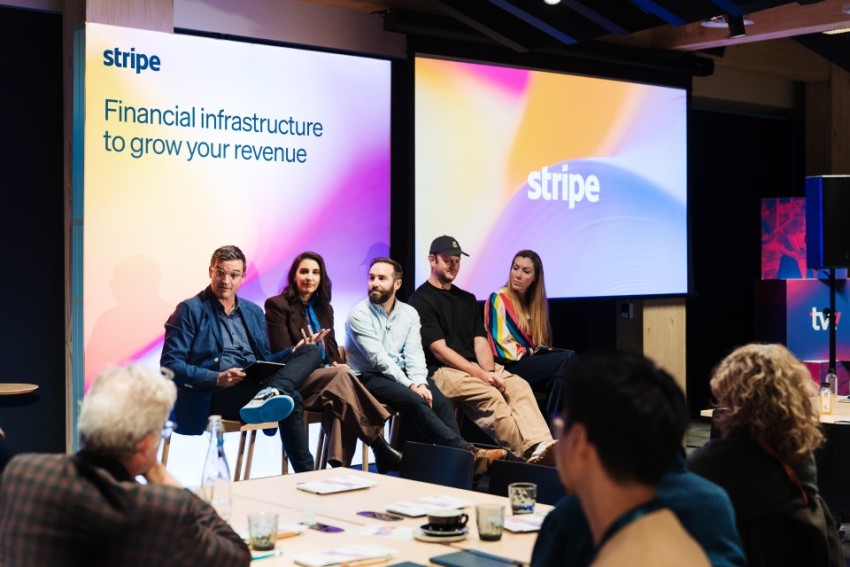
At Techweek26, strategic sponsor Stripe hosted The Intelligence Era: Pricing AI for Growth, a timely conversation for any business building AI features into products that need to scale sustainably.
Facilitated by Janine Grainger, the session brought together a powerhouse panel of Stripe customers comprising founders and operators from across New Zealand’s tech ecosystem:
-
Austin Dustow (Head of Payments, Vista Group)
-
Gal Thompson (VP APAC, Re-Leased)
-
Leighton Roberts (Co-Founder & Co-CEO, Sharesies)
-
Ben Hanna (Country Manager, Stripe New Zealand)
The conversation made one thing very clear: AI is already changing how software creates value, and naturally, that requires companies to rethink how that value is priced.
AI has real marginal cost
Ben opened with a reset: unlike traditional SaaS, where marginal cost trends toward zero, AI features have a real and ongoing compute cost. Every time customers use AI, cost increases.
That creates tension with old pricing habits. Many platforms bolt AI into existing subscription tiers, but the panel noted how quickly that can break down. Power users can destroy unit economics, variable compute costs can be unpredictable, and token-based pricing often feels disconnected from what customers think they’re paying for.
A key takeaway was that pricing needs to protect margin as usage scales, without confusing customers.
Hybrid and outcome-based pricing are moving from theory to practice
One of the strongest themes was the shift toward hybrid pricing. In fact, according to Stripe, high-growth companies - those growing 100% year-on-year - are twice as likely to use hybrid pricing. The logic is simple:
-
a predictable base creates revenue stability for customers and vendors
-
a variable component protects margin and can align to value delivered
But what “usage” looks like in practice is evolving. The panel repeatedly returned to the idea that customers don’t want to buy tokens. They want outcomes.
Outcome-based pricing came through as the model that best fits the AI era, because it keeps the value exchange simple. Customers pay when the promised result is delivered.
Re-Leased: treating AI like a startup inside the business
Gal Thompson shared how Re-Leased approached AI as a dedicated commercial and product motion, rather than something sprinkled across the company.
A specialist go-to-market team was set up, with a dedicated product owner to avoid fragmented accountability across multiple squads. Re-Leased also treated the AI product like a “startup within Re-Leased,” which enabled faster learning and different sales motions, including trials.
On pricing, Re-Leased landed on a predictable model because customers valued certainty. The signal from the market was clear. Even if usage-based models made theoretical sense, they didn’t “fly” in a property management context.
Gal also shared a candid lesson: the early “honeymoon phase” can be misleading. Customer expectations moved quickly, and staying competitive required constant iteration. The message was to keep pace and avoid complacency.
Vista Group: embedding AI into payments to reduce friction in pricing
Austin Dustow shared Vista’s journey of pricing AI based on outcomes, tied directly to the customer’s reality: cinemas are under pressure. Attendance is down, costs are up, and operators need tangible help.
Vista’s AI features aim to lift revenue and reduce operating cost, including tools like AI-assisted scheduling. Historically, Vista priced these value gains through subscription-style fees, but the panel discussed how that can carry risk if usage spikes and costs climb.
The shift for Vista has been to pair AI with embedded payments. Cinemas already accept variable pricing in payments, so using that channel helps remove resistance to variable pricing models. It also lowers the barrier to adoption because customers pay when the outcome is achieved.
Sharesies: in regulated environments, certainty and trust still lead
Leighton Roberts shared Sharesies’ view from a heavily regulated financial services context. The core pricing model is still driven by flows and funds under management, and Sharesies does not believe that will suddenly change because AI arrives.
What is changing is where and how customers expect to experience the product. Sharesies is investing across three pillars:
-
language model experiences for customers
-
productivity improvements for teams
-
being ready for a world where agents become customers too
A key tension Sharesies is navigating is how to give customers a natural language experience while still meeting expectations for transparency and explainability. Regulators want clarity on “how you got there,” even when customers want a conversational experience.
The session also touched on how AI may make pricing comparisons more transparent over time, particularly for companies that have always been upfront about fees.
A shared reality: measuring AI ROI is still messy
When the conversation moved to ROI measurement, the panel was refreshingly honest. There is no universal playbook yet.
Some teams can feel productivity gains immediately, but struggle to quantify them cleanly. Others anchor measurement to expansion metrics like net revenue retention. The big point was that AI investment is increasingly becoming existential. Many businesses see it as “innovate or die,” even when measurement is imperfect.
Operating models are changing too, not just pricing
The panel also explored how AI is reshaping internal operating models.
Vista described governance mechanisms like an AI ethics committee, mandatory AI training, and a role focused on implementation effectiveness across the organisation.
Re-Leased shared that engineering teams have grown, not shrunk. Keeping up requires more build capacity, even with AI tooling. They also noted the morale boost when teams feel more creative and empowered in their work.
Across the conversation, one operational theme stood out: AI adoption works better when organisations create guardrails that enable progress, rather than policies that create fear or paralysis.
“Ship something” and learn fast
Ben’s advice for businesses trying to price AI right now was simple: ship something.
Pricing is a hypothesis until it meets the market. The companies that iterate faster will be the ones that avoid margin surprises and align pricing to how customers actually buy.
The closing reflections were optimistic. AI is levelling the playing field for New Zealand. We have the talent and ambition, and we no longer need a Silicon Valley zip code to build world-class products. But the panel also left the room with a reminder that matters in every era of software:
Customer rules. AI is the tool. Value is the job.
Stripe is a Strategic Sponsor of Techweek26.
Subscribe to the Techweek newsletter for updates straight to your inbox:
Recent news

The Niu Wave: Tech Futures — rangatahi, resilience, and rewriting the rules of who tech is for
26 Jun 2026
At Techweek26, The Niu Wave: Tech Futures produced by The Southern Initiative and Te Ngahere created a powerful space for rangatahi and whānau to hear directly from Māori and Pasifika…

Mayoral Celebratory Event: honouring Auckland’s Hi‑Tech Awards finalists
26 Jun 2026
As Techweek26 built toward its final nights of celebration, Auckland Council brought the sector together for something new: a Mayorals celebration to recognise the 29 Auckland-based finalists heading into the…
We can't hire our way out of this: Demographics, productivity and the AI choices facing New Zealand (event recap)
26 Jun 2026
At Techweek26, principal sponsor Deloitte hosted a conversation with an intentionally blunt title: We can’t hire our way out of this. The focus landed quickly.