Mayoral Celebratory Event: honouring Auckland’s Hi‑Tech Awards finalists
By Techweek Team
26 June 2026
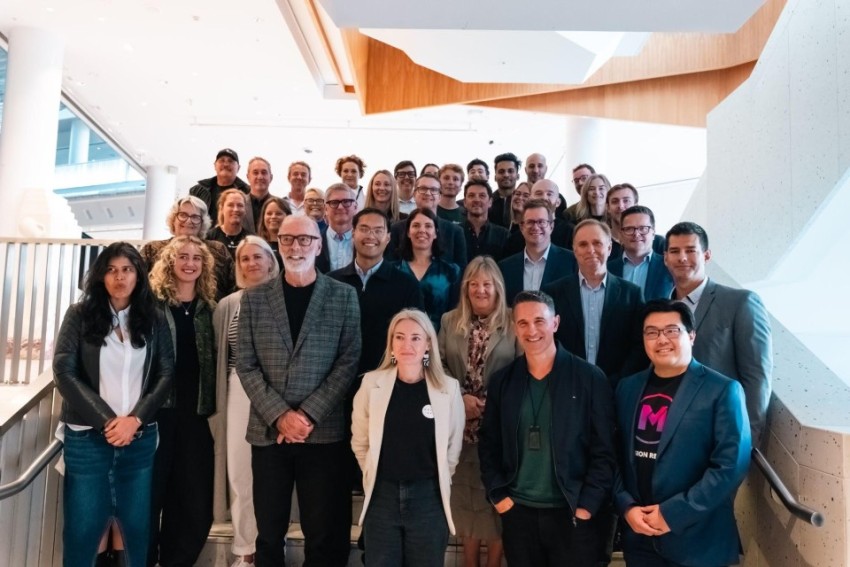
As Techweek26 built toward its final nights of celebration, Auckland Council brought the sector together for something new: a Mayorals celebration to recognise the 29 Auckland-based finalists heading into the 2026 New Zealand Hi‑Tech Awards.
It was deliberately informal. Good food first, then kōrero. A room full of founders, investors, researchers, and ecosystem builders who spend most of their time heads-down, building. The message of the day was simple: Auckland should celebrate its tech companies loudly, and back them with the leadership and connections they need to grow.
“Create an ecology of innovation”
Mayor Wayne Brown framed the lunch as part of Auckland’s push to build a stronger “ecology of innovation”, drawing on what he’d seen overseas and what he’d heard from local founders about what the sector needs most.
He spoke to the role Auckland can play in opening doors, connecting innovators to global markets and decision-makers. He also encouraged startups to look beyond “tech for tech’s sake” and into the big industries New Zealand already has, from agriculture through to meat and timber.
His message to the finalists was direct: you’ve already shown initiative by building something worth recognising, and you’re not doing it alone. Ecosystems are made of relationships.
Government signal: productivity, translation, and global reach
Hon Penny Simmonds, Minister for Science, Innovation and Technology, reinforced the government’s focus on innovation as a productivity lever, and the importance of translating ideas into globally competitive firms.
She highlighted the value of connected pathways between research, capital, talent, and markets, and acknowledged Auckland’s role in the wider science and innovation system. She also pointed to the government’s role as building stable foundations, not micromanaging innovation.
The takeaway was clear: Aotearoa needs to move faster, collaborate more deeply, and turn momentum in individual projects into something systemwide.
Frances Valintine: backing the frontier, together
Frances Valintine brought a longer view, reflecting on nearly three decades of building in New Zealand tech and education. She reminded the room how far the country has come, from the days of “sneaker net” file transfers to today’s connectivity, and argued we’re at another turning point now.
For Frances, the connector in this era is AI. But the core requirement is the same as it has always been: collaboration over competition, and a willingness to carve out specialisations where New Zealand can lead.
Her challenge was practical. The era is changing quickly, the economics of AI are changing too, and it’s not about following. It’s about choosing where we can create the frontier and becoming a trusted partner to global players.
Founder reality: three finalists, three very different stories
A short panel of finalists brought the conversation back to what building looks like day to day.
-
Daisy Lab shared their precision fermentation journey, using engineered yeast to produce dairy proteins in a fermentation process similar to brewing, and why building this in New Zealand makes sense because of our deep dairy innovation ecosystem.
-
Halter spoke to staying close to customers, and how virtual fencing and herd management is changing what’s possible for pasture-based farming, including labour reduction and better pasture utilisation.
-
Kara Technologies spoke to building sign-language accessibility through AI and digital humans, and how being a small country can be an advantage when you can work closely with users, learn quickly, and iterate fast.
Despite the differences, a common thread came through: talent matters, but so does an ecosystem that’s willing to share advice, open doors, and create momentum around founders doing hard things.
Auckland’s 29 finalists
The event closed with a roll call of Auckland finalists, spanning deep tech, agritech, creative tech, manufacturing, public good, emerging leaders, and ecosystem contributors. It was a reminder of the diversity of innovation coming out of Tāmaki Makaurau right now.
Finalists recognised included:
Aroa Biosurgery; Auror; Halter; Calocurb; Starshipit; Kara Technologies; SeaFlux; CloudHound; RossOps; UneeQ; Alfrio; Alimetry; PURELY; Torkless; Astute Access; GridAKL; Mission Ready; Oxygen Advisors; RocketWerkz; StaplesVR; MACSO Technologies; Trackit; Hectre; and individual finalists including Nathan Konigkramer (Spectrum Consulting), Jean‑Luc Ellis (WasteX), Sam Broadhead (Sence), Irina Miller (Daisy Lab), and Dan Te Whenua Walker.
What we’re taking forward
The event was a small moment with a big signal: Auckland wants to celebrate its tech builders, and back them with the leadership and coordination that helps companies scale.
Auckland’s tech story is not only about individual success. It’s about creating the conditions where more companies can grow, more talent can see a pathway, and more global partnerships can be formed from right here in Aotearoa.
And for the finalists heading into awards night, the message was clear: you’re already doing something worth celebrating.
Subscribe to the Techweek newsletter for updates straight to your inbox:
Recent news
The Niu Wave: Tech Futures — rangatahi, resilience, and rewriting the rules of who tech is for
26 Jun 2026
At Techweek26, The Niu Wave: Tech Futures produced by The Southern Initiative and Te Ngahere created a powerful space for rangatahi and whānau to hear directly from Māori and Pasifika…
We can't hire our way out of this: Demographics, productivity and the AI choices facing New Zealand (event recap)
26 Jun 2026
At Techweek26, principal sponsor Deloitte hosted a conversation with an intentionally blunt title: We can’t hire our way out of this. The focus landed quickly.
TW26 x Xero Webinar: Bridging the confidence gap on AI adoption for Kiwi business owners (recap)
23 Jun 2026
As part of Techweek26, Xero hosted a webinar on a challenge that’s showing up in thousands of Kiwi businesses right now: AI is moving quickly, but confidence is not always…