From Feedback to Action: Closing the Loop on Customer Experience with Zoho
20 May 2026
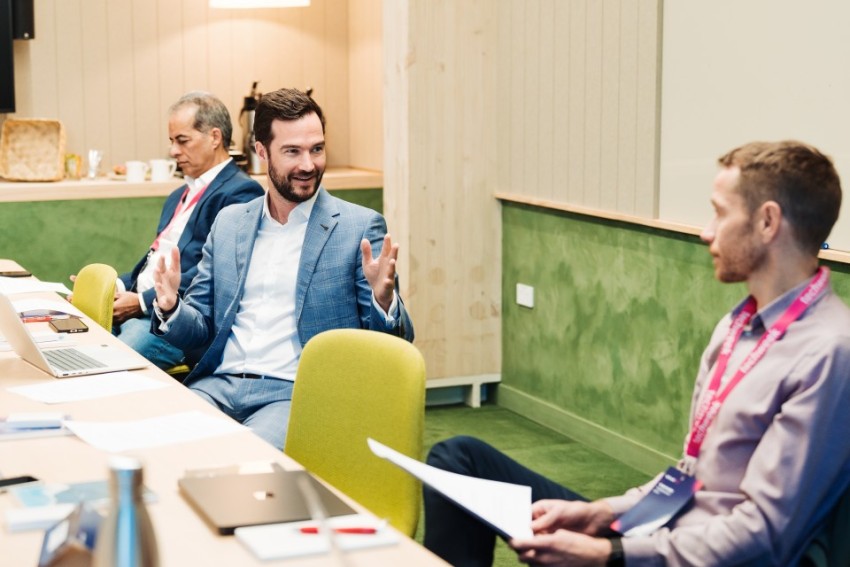
As part of Techweek26, Zoho and Tech New Zealand brought together a small group of leaders for a practical roundtable on a shared challenge across Aotearoa: how we connect customer insight to day-to-day service workflows, and translate it into stronger retention outcomes.
This was a candid conversation about what’s working, what’s getting in the way, and what “good” looks like when teams try to close the loop. Here were the key insights from the session.
The fragmented customer view
The discussion opened with a simple question: how many systems do you need to check to get one customer’s full story?
Across the table, the answer was rarely “one.” Even small organisations described working across multiple systems that don’t integrate cleanly. The result is not just inconvenience. It creates duplication, slows response times, and increases cost to serve.
A recurring issue was “institutional knowledge” sitting in people’s heads, inboxes, or spreadsheets. When that happens, it becomes harder to maintain continuity for customers, and harder to deliver consistently when key staff are away.
Treating Voice of Customer as operational data
The group then moved from collection to action: what happens after NPS or Voice of Customer data is gathered?
A strong theme emerged: customer experience is a team sport. If metrics live inside one function without cross-functional ownership, they rarely drive meaningful change.
Participants also noted the risk of treating NPS as a standalone score. The real insight comes from connecting what happened operationally, what the customer experienced, and what outcome the business is trying to achieve. Without that connection, insight stays descriptive rather than actionable.
Closing the “inner loop” and making space for the “outer loop”
A useful framework raised in the conversation was the difference between the inner loop and the outer loop.
The inner loop is immediate response: a customer is unhappy, a ticket is raised, and the priority is to resolve it well.
The outer loop is systemic improvement: identifying root causes and preventing the same issues from happening again.
Most organisations are set up to respond to the inner loop. The outer loop is where leaders want to get to, but it often loses out to time, priorities, and a lack of holistic visibility.
One point came through clearly: closing the loop needs clear ownership. Shared responsibility works best when someone is accountable for moving it forward.
Automation, service workflows, and keeping customers in the loop
The conversation also explored where workflow automation can reduce friction for both customers and teams.
Leaders discussed practical opportunities including smarter triage and routing, proactive updates, and reducing the need for customers to repeat themselves across departments.
The thread that connected it all was reliability. Customers don’t experience “human error” as a category. They experience broken promises. If an organisation says it will follow up, it needs systems and workflows that make that follow-up dependable.
Churn risk, advocacy readiness, and the hidden cost of disconnected tools
Finally, the group turned to churn and loyalty, including the reality that many customers don’t complain. They simply disengage.
Participants discussed how churn signals can look different across B2B and B2C contexts, and how loyalty can drop quickly when customers are forced to repeat their story across teams.
One idea captured the sentiment: as a customer, you expect an organisation to know you. When context doesn’t travel, it doesn’t just slow service. It changes how customers feel about the relationship.
What we’re taking forward
Across the roundtable, a consistent direction of travel emerged for organisations in Aotearoa:
-
Make customer context easier to access, so teams can act with confidence
-
Close the inner loop reliably, so customers feel heard and supported
-
Create time and ownership for the outer loop, so problems are prevented, not repeated
-
Use automation and AI to reduce friction and surface signals earlier
-
Treat CX as a shared capability, not a single department’s responsibility
This is the work of connecting insight to action, and doing it in a way that’s practical, human, and measurable.
—
Zoho is a connecting sponsor for Techweek26
Zoho is a privately held technology company offering business software ranging from sales and marketing to customer support, finance, and back-end operations. Over 150 million users rely on Zoho every day to run their businesses—including Zoho itself. Learn more about the company here.
Subscribe to the Techweek newsletter for updates straight to your inbox:
Recent news

The Niu Wave: Tech Futures — rangatahi, resilience, and rewriting the rules of who tech is for
26 Jun 2026
At Techweek26, The Niu Wave: Tech Futures produced by The Southern Initiative and Te Ngahere created a powerful space for rangatahi and whānau to hear directly from Māori and Pasifika…
Mayoral Celebratory Event: honouring Auckland’s Hi‑Tech Awards finalists
26 Jun 2026
As Techweek26 built toward its final nights of celebration, Auckland Council brought the sector together for something new: a Mayorals celebration to recognise the 29 Auckland-based finalists heading into the…
We can't hire our way out of this: Demographics, productivity and the AI choices facing New Zealand (event recap)
26 Jun 2026
At Techweek26, principal sponsor Deloitte hosted a conversation with an intentionally blunt title: We can’t hire our way out of this. The focus landed quickly.