Global Growth Playbook: Four Kiwi Tech Leaders Share Their International Expansion Journeys
By Techweek Team
27 May 2025

The "Global Growth Playbook: Strategies from NZ Tech Leaders" headline event at Techweek25 brought together four of New Zealand's most successful tech exporters to share the unvarnished truth about scaling internationally. Hosted by Sarah Hindle, Sector Lead for Manufacturing, Technology and Services at New Zealand Trade and Enterprise (NZTE), the panel featured Alliv Samson, CGO and Co-founder of Kami; Alex Black, CEO of ADInstruments; Matt Hayter, President and CPO of Projectworks; and Regan Whitehead, Chief Operating Officer of Tapi.
The Global Vision: When to Take the Leap
A fundamental question for any New Zealand tech company is when to expand beyond our small domestic market. For Alliv Samson, whose digital classroom app Kami now serves over 50 million users across 180 countries, the decision to go global was made early—though not without initial hesitation.
"Unfortunately during our first year we went conservative because everybody around us was telling us to stay in New Zealand," Samson explained. "That was our biggest mistake. If someone asked me what would be your biggest regret, that would be it."
After spending their first year focused solely on the New Zealand market, Kami realised it wasn't the right fit for their product. "At the end of our first year, it's either we fold or pivot. So we pivoted and we're like, we have nothing else to lose. We'll go to the U.S. and that's the start of our growth."
For Matt Hayter, the global journey began with a push from investors. "In the very early days we were just sort of figuring out what we were doing," Hayter recalled. "Our trigger point was actually, we got some investment and we went to hire our first salesperson and they said, you need to hire this person in the U.S. otherwise there's kind of no point."
While initially daunting, this early international focus proved invaluable: "Going global on day one was really difficult, but it's really opened up our addressable market. You get to determine if you have a product market fit globally early, so you're really optimising for the longer term."
The Brazil Breakthrough: Finding Unexpected Markets
Alex Black shared how ADInstruments, now celebrating 40 years in business, found success in unexpected places. While the company now generates less than 2% of its revenue from New Zealand, with major markets in the US (40%), UK/Europe (30%), and China (10%), one of their most surprising growth stories came from Brazil.
"We've done really well with our online learning platform for medical education in Brazil," Black explained. "Five years ago we had no revenue there for that particular product. Now it makes up close to about 20% of our revenue for our software products, probably one of our fastest growing markets. And I don't know too many other New Zealand tech companies who are in Brazil."
This success wasn't random but came from identifying specific market conditions: a growing need for healthcare professionals, the perception of healthcare as a secure career path in South America, and an interesting trend where US private equity firms were buying Brazilian medical schools and standardising their curriculum and software tools.
"It was sort of a trifecta of those things, right? Big population. Money coming in, government directives... it was kind of a perfect mix," Black noted.
The Market Selection Matrix: Choosing Where to Expand
For Tapi, which now manages maintenance for hundreds of thousands of properties across New Zealand and Australia, market selection was a careful balance of opportunity and focus.
"A lot of founders want their business to be big, but New Zealand is small. Within our market segment Australia is ten times bigger, the U.S. is 100 times bigger," Whitehead explained. "So it was always on the plan to go global, but it's easier said than done to scale overseas."
Whitehead emphasised the importance of establishing a strong foundation in your home markets before expanding: "We focused on New Zealand to start. When we reached a level of saturation and had the capital, that was a trigger point for expanding into Aussie. Our business is sales-led so it was important to have a team on the ground to make good progress in Australia."
When asked about what factors matter most when selecting new markets, the panellists offered varied perspectives:
Samson focused on classroom infrastructure: "What does the classroom look like? Do they have the right tools to set them to success before they use your product? We needed the classrooms to have the device that they needed to do work. We need IT infrastructure or IT support within the school."
Black highlighted three key factors: "You've got to be solving a problem and there needs to be demand for solving that problem. And then follow whether or not that market has money."
Culture: The Secret Sauce of Global Success
All panellists stressed the importance of company culture when operating across multiple markets. For Tapi, who now have team members across six countries, maintaining culture while scaling has been a deliberate focus.
"There's two critical things," Whitehead explained. " Hiring people who demonstrate the behaviours that you want in your business and share the same values. And then making sure you've got processes in place for how you run your business to make them successful."
When asked why people choose to work for Tapi, Whitehead highlighted their supportive environment: "It's our fantastic team, and no blame kind of culture. We focus on the outcome, issue or opportunity and just get stuck in, get it done and learn as we grow."
Hayter shared a similar philosophy at Projectworks, emphasising the importance of being deliberate about culture: "I think the most important thing about culture is that it's gotta be really deliberate and really lived from the founders and the leaders."
He added that culture isn't about being universally appealing: "I don't think there is such a thing as a good or a bad culture. Culture should be deliberate and people should know what it is."
The Toughest Setbacks: Learning from Failure
In perhaps the most valuable segment of the discussion, each leader shared their most challenging setback and how they overcame it.
For Samson, the COVID pandemic growth explosion was both their best moment and toughest challenge: "We were getting a million new users a day and that was fantastic. But it comes with a lot of challenges for us to survive and also make sure that we still give them the best service."
She also highlighted the early struggle to raise capital: "It was very frustrating because during that time, this was way before COVID, this was ten or twelve years ago. Whenever we told investors the problem, they're like, 'There's no money in there. It's not important.'
Hayter described a moment when Projectworks lost its way after raising funding: "We'd just done a funding round, suddenly we had a reasonable amount of money in the bank and the strategy to spend it wasn’t fully developed yet. At one point we had seven Sales Development Reps randomly cold calling into the US.”
The company had to take stock and get back to its roots: "There was a period where it was quite tough… It's easy to waste money when you've got money."
Black shared how ADInstruments faced a perfect storm during the pandemic: "We also had the challenge of both being a hardware and software company. So whilst our software business was growing really fast, we also had the supply chain issues that electronics were experiencing during that time."
Compounding this, the company decided to triple their total addressable market by entering two new verticals at precisely the wrong time: "We decided to go into that after we peaked in terms of the demand. If we built that product pre-pandemic, we would have done really well with that, I think. But we decided to build that product mid-pandemic. By the time it was finished, we were then in this post-COVID recession world."
Practical Advice for Global Expansion
The panel concluded with actionable advice for companies considering international growth:
On market selection:
"We look at what worked in our market, which is the US. Do we see that happening in the UK, in Canada, in Australia, in Singapore? Do we see early indicators in those markets?" - Alliv Samson, Kami
On having local presence:
"We've got our values. When we're interviewing people, we go very deep on their experience to make sure they've got the right behaviours for the fit in our culture." - Regan Whitehead, Tapi
On maintaining culture across borders:
"You've got to be really clear what you expect of people and you have to lead that." - Matt Hayter, Projectworks
On the founder's mindset:
"For every founder, it's just finding your right path, finding the right people, and finding the right support that you need to get there. But, this is part of the DNA." - Alliv Samson, Kami
On resilience:
"There are so many moments where things don’t go the way your way. These are crucial moments to stay positive, learn heaps and focus on other ways to deliver the outcome….just come back even stronger." - Regan Whitehead, Tapi
The Tenacity Factor: What Makes Global Founders Succeed
When asked whether the tenacity needed for global success was innate or developed, Samson suggested it's part of a founder's DNA: "It's a characteristic that comes out of a founder, right? It's the go-getter, the hard-working, the hustler, the ‘whatever no that I get, I'll find another yes’."
The panel agreed that while the path to global success is challenging, the qualities that make it possible—resilience, adaptability, and a willingness to learn from failure—can be cultivated with the right mindset and support.
What's Next for Kiwi Tech Exporters?
For companies looking to follow in the footsteps of Kami, ADInstruments, ProjectWorks, and Tapi, the panellists' journeys offer both inspiration and practical lessons on how to navigate the complex path from local startup to global success story.
For more tools and resources, visit myNZTE.
Subscribe to the Techweek newsletter for updates straight to your inbox:
Recent news
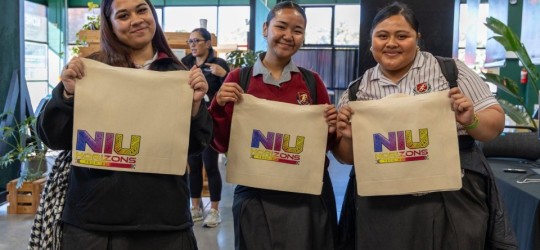
The Niu Wave: Tech Futures — rangatahi, resilience, and rewriting the rules of who tech is for
26 Jun 2026
At Techweek26, The Niu Wave: Tech Futures produced by The Southern Initiative and Te Ngahere created a powerful space for rangatahi and whānau to hear directly from Māori and Pasifika…
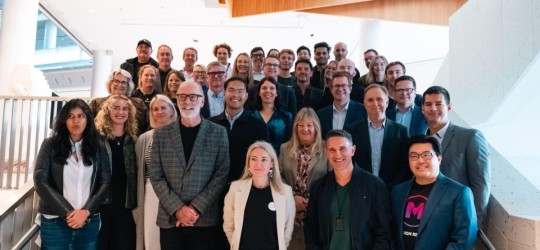
Mayoral Celebratory Event: honouring Auckland’s Hi‑Tech Awards finalists
26 Jun 2026
As Techweek26 built toward its final nights of celebration, Auckland Council brought the sector together for something new: a Mayorals celebration to recognise the 29 Auckland-based finalists heading into the…
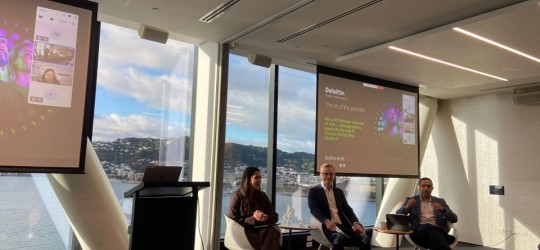
We can't hire our way out of this: Demographics, productivity and the AI choices facing New Zealand (event recap)
26 Jun 2026
At Techweek26, principal sponsor Deloitte hosted a conversation with an intentionally blunt title: We can’t hire our way out of this. The focus landed quickly.