People First, Tech Second: How Technology Can Truly Unlock Workforce Potential
By Techweek Team
21 May 2025

The "Role of Tech in Unlocking Workforce Potential" session at Techweek25 offered a refreshing counterpoint to the AI-dominated discourse of the week. Featuring Craig Steel, CEO and Founder of Vantaset, in conversation with moderator Matt Greenwood, the discussion explored how organisations can leverage technology to enhance human capability, rather than simply replace it.
Beyond the AI Hype: The Human Element
Steel began by noting the technology-heavy focus of Techweek's productivity-themed events. "If you are hoping for an AI-themed conversation, you're probably in the wrong place, but stick with us and we'll have something interesting to say," he quipped, setting the tone for a discussion that would prioritise human potential over technological solutions.
In a business environment characterised by geopolitical challenges, climate change, and economic pressures, Steel highlighted how these macro trends affect both organisations and individuals.
"It's a very real scenario where not only business owners are finding it difficult, whether that's through capital or productivity... But it's equally really hard for staff," Steel explained.
People: Your Only Sustainable Competitive Advantage
A central theme of the discussion was Steel's assertion that while products, services, and brands can be replicated, an organisation's people represent its only truly sustainable point of difference.
"When we think about the primary things that are ingredients that an organisation can use to compete, whether that's products and services which they will of course have their own brand or proposition, and then there's people who are making products or delivering them... The brand piece and products and services are things that any organisation can largely compete on," Steel observed.
However, he noted that many organisations have become "more and more hesitant" about investing in their people, "feeling like it is less of a point of difference and as a result just trying to manage their human resource as a cost."
This approach fundamentally misunderstands where competitive advantage truly lies in today's economy. As Steel put it: "When we start to look at the human component, the real human factor in business, it's a piece that we can get enormous leverage from."
The Sporting Mindset vs. Corporate Reality
Drawing on his background in sports performance, Steel highlighted the stark contrast between how sporting organisations and businesses approach human potential.
"When we first went into business, we assumed that CEOs and execs would be really aspirational for their people, wanting to enable them to deliver the magic," Steel reflected. Instead, he found that as organisations grow, "that sort of spirit being replaced with scaffolds and guardrails... where it's less about what could be delivered and it's much more about the predictability or the certainty of what's delivered."
This approach, he argued, "just destroys the ingenuity within staff. So people tend to feel like they've got a job, they just have to keep their head down and deliver what's required. Rather than saying, what could we do if we really put our mind to it?"
Technology's Role: Enabler, Not Replacement
When the discussion turned specifically to technology's role, Steel offered a nuanced perspective that acknowledged both the basic productivity benefits of technology and its potential to transform work in more profound ways.
"There are obviously the more basic dimensions, and I don't mean basic in terms of the technologies themselves, but the whole idea around saying how do we enable people to do more with less?" he explained. This approach to technology has been ongoing for centuries, dating back to the industrial revolution.
However, the more exciting frontier is how technology can mobilise individuals in new ways: "What difference can we make for a work group or a team or an individual for a particular role? So that it's not only about delivering more value, but it could be about delivering a much richer or greater experience."
The Fraught Relationship Between People and Technology
When asked about people's relationship with technology, Steel acknowledged the mixed reality many organisations face.
"It's fraught," he admitted. "In some instances, as we see new technologies being applied in the business and people grip it up and they love it and it helps them do their job... But equally we see a lot of instances where regular technologies are presented as solutions, but they're not necessarily adopted by the business."
The critical difference often comes down to engagement and intent: "It's not just about people's relationship with the technology itself... but it's also about the relationship they have with the business and whether that changes as a consequence of that technological investment."
This highlights a key challenge for organisations: technology that meets compliance requirements doesn't necessarily deliver useful outcomes. "You can meet the bar without being useful, which is kind of annoying," Steel observed.
Technology as a Source of Joy
On a more positive note, Steel acknowledged that technology can bring support, fun, and joy into people's working lives when implemented thoughtfully.
"The piece that I'm always most interested in is what does the technology not only enable us to do, but what does it enable us to become?" he explained. "What is it that our people think they need to deliver whatever those improved outcomes that we're looking for?"
This might involve personalised and contextual support for employees, better connections to customers, or enhanced ability for managers to influence and support their teams.
Advice for Leaders: People First, Technology Second
For leaders navigating technology decisions, Steel offered clear guidance: start with your people and your purpose, not with the technology itself.
"Be really clear about the intent of the organisation. So what is it? What does it stand for? Where does it believe it can really win?" he advised. "And what technologies do they think they can potentially apply or deploy to enable them to be able to do what they do already, but better."
He cautioned against becoming "so consumed by it all that we just want to grab everything," which risks organisations losing sight of who they are and what they stand for.
"What technologies could we institute to enable our people to deliver the outcomes that we're after? Or the outcomes that we're promising... There is almost more excitement building within leaders around technologies than their own people. And when you get into that mode, I would argue you're at the risk of losing it." — Craig Steel, CEO, Vantaset
Vantaset's Own Technology Journey
When asked how Vantaset is practicing what it preaches, Steel shared his company's focus on developing their performance platform—an operating system designed to help customers realise benefits through their people.
"Most of our focus, of course, has been on the development of our performance platform, so the operating system. So we've spent an enormous amount of time and money and effort trying to get that up," he explained. While acknowledging his own limitations as a "technical dinosaur," Steel highlighted how new team members with technological expertise are helping integrate AI capabilities into their framework.
The Einstein Connection: Creativity, Intelligence, and Fun
The session concluded with a reflection on Einstein's observation that "creativity is intelligence having fun." This perfectly captured Steel's central message: technology can enhance human potential, but it's ultimately people who unlock the potential in other people.
"Absolutely," Steel agreed when asked if people, not technology, are the key to unlocking potential. "There is no doubt the technologies that we introduce can have a really profound impact, but it's still people making decisions around the technologies."
What's Next for Workforce Technology
As Techweek continues, the insights from this session provide a valuable lens through which to evaluate other technological developments. The message is clear: the most successful implementations of workplace technology will be those that enhance human capabilities and relationships rather than simply automating tasks.
For organisations looking to truly unlock workforce potential, the starting point should be a deep understanding of their people andBl purpose, followed by thoughtful technology choices that align with and enhance that foundation.
Subscribe to the Techweek newsletter for updates straight to your inbox:
Recent news

The Niu Wave: Tech Futures — rangatahi, resilience, and rewriting the rules of who tech is for
26 Jun 2026
At Techweek26, The Niu Wave: Tech Futures produced by The Southern Initiative and Te Ngahere created a powerful space for rangatahi and whānau to hear directly from Māori and Pasifika…
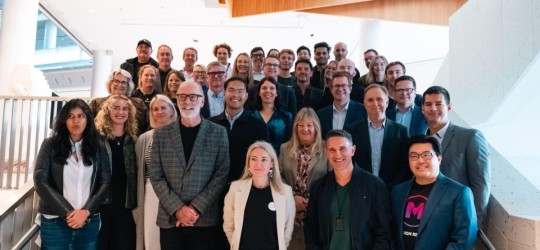
Mayoral Celebratory Event: honouring Auckland’s Hi‑Tech Awards finalists
26 Jun 2026
As Techweek26 built toward its final nights of celebration, Auckland Council brought the sector together for something new: a Mayorals celebration to recognise the 29 Auckland-based finalists heading into the…
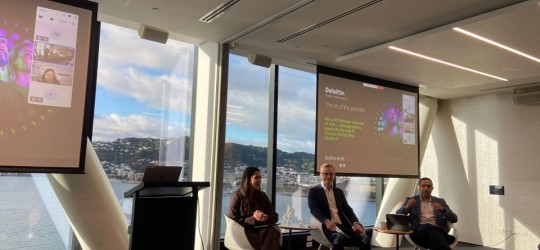
We can't hire our way out of this: Demographics, productivity and the AI choices facing New Zealand (event recap)
26 Jun 2026
At Techweek26, principal sponsor Deloitte hosted a conversation with an intentionally blunt title: We can’t hire our way out of this. The focus landed quickly.