The AI Advantage for People Ops: from pressure to operational clarity with Employment Hero
By Techweek Team
23 May 2026
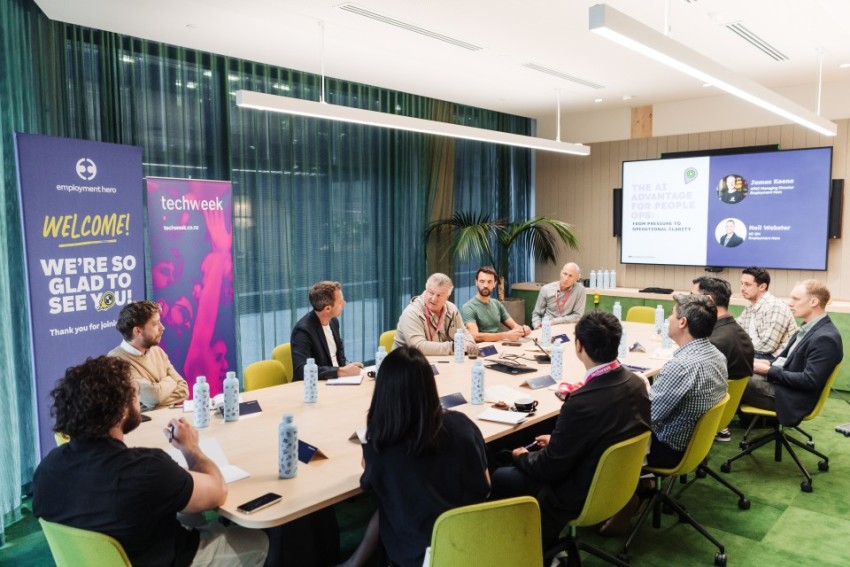
On Monday 18 May at the Techweek26 Hub in Auckland, Employment Hero and Tech New Zealand brought together senior leaders from across the employment and people operations ecosystem to compare notes on a shared reality in 2026: people ops is under pressure, and the “manual era” is no longer sustainable.
The conversation was practical and honest. Leaders spoke about what’s getting harder, where AI is already helping, and what needs to be true for AI to create operational clarity rather than new risk.
When “polished” applications create more work, not less
A clear pain point emerged early: it’s never been easier to apply for jobs, and employers are feeling the volume.
Participants discussed how AI is rapidly changing recruitment dynamics. Applications are becoming more polished and easier to produce at scale, making it harder for hiring teams to quickly distinguish between strong-fit candidates and those who simply present well on paper. As CVs and cover letters become increasingly refined, the burden shifts back onto employers to assess quality and genuine fit more effectively.
The question wasn’t whether AI belongs in recruitment. It was how to use it responsibly to move from hundreds (or thousands) of applications to a shortlist that humans can properly assess, while keeping judgement, accountability, and candidate experience at the centre of the process.
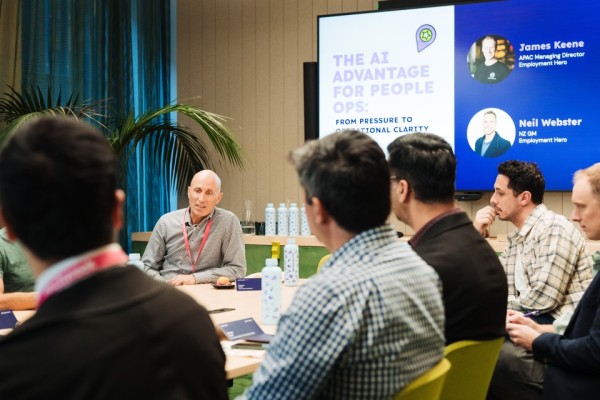
AI can improve candidate experience, not just employer efficiency
One of the most constructive threads was the role AI can play in improving the candidate experience, especially in high-volume roles.
The group discussed AI interviewing as a way to:
-
create a 24/7 pathway for candidates who can’t take time off work to interview
-
reduce pressure for nervous candidates, with an “infinitely patient” format
-
ensure more applicants hear back, with personalised feedback rather than a generic templated email
A strong takeaway was that employer brand is part of the hiring system. If applicants never hear back, trust erodes. AI can help close that gap, but only if the process is designed thoughtfully.
The shift in roles: from operators to validators
Several leaders spoke about how AI is changing the shape of work inside organisations. A useful framing was the move from “operators to validators.”
AI can do the groundwork quickly, but humans still need to:
-
set the standards
-
check the work
-
make judgement calls
-
stay accountable for outcomes
That shift matters in people ops, where decisions impact livelihoods, culture, and legal compliance.
Governance is the difference between speed and chaos
A recurring theme was the challenge of balancing speed with consistency as AI adoption accelerates across organisations.
Participants shared how teams using different tools and different prompts can quickly create inconsistent outputs, and that inconsistency can damage brand trust. The practical fix discussed was simple:
-
allow flexibility in tools and inputs where appropriate
-
control outputs tightly through clear standards, review steps, and policies
The emphasis was on governance that enables pace, not governance that shuts innovation down.
Trust, privacy, and compliance: the risks are real
The group also named the risks plainly.
Leaders discussed the “AI smell” when outputs are uncurated and obviously machine-generated. In employment contexts, trust is fragile, and process design matters.
There was also a strong caution around AI answering policy questions. If an AI gives the wrong guidance on something like leave entitlements, organisations can end up in a serious compliance and employment relations situation.
Employment Hero helps Kiwi businesses stay audit-ready, reduce administrative burden, and operate with confidence as they grow. At the heart of the platform is Hero AI, the intelligence layer that powers specialised AI agents across recruitment, HR, payroll, and compliance. Hero AI draws from an organisation's own data , including policies and records stored within the platform, alongside Employment Hero's knowledge base, to deliver real-time, contextual guidance tailored to the business and employees.
The conclusion was that using AI in people ops requires rigor around security, privacy, reliability, and testing. Prototype energy is useful, but employment systems sit on critical paths and need to stand up under scrutiny.
What operational clarity looks like in 2026
Across the conversation, “operational clarity” looked less like a single tool and more like a set of choices:
-
reduce busy work so people ops teams can focus on value-adding work
-
use AI to handle volume while keeping humans accountable for decisions
-
build governance that protects brand consistency and employee trust
-
treat compliance as a design requirement, not an afterthought
-
hire and develop people with the curiosity to adapt, because the tools will keep changing
The roundtable landed on a grounded conclusion that fits Techweek’s kaupapa. AI is not the be all and end all, better systems,people and process together are . AI can help organisations across Aotearoa move from pressure to clarity.
Is your organisation experiencing pressure and could do with operational clarity? Reach out to Employment Hero.
—
Employment Hero is a Connecting Sponsor for Techweek26.
Subscribe to the Techweek newsletter for updates straight to your inbox:
Recent news
The Niu Wave: Tech Futures — rangatahi, resilience, and rewriting the rules of who tech is for
26 Jun 2026
At Techweek26, The Niu Wave: Tech Futures produced by The Southern Initiative and Te Ngahere created a powerful space for rangatahi and whānau to hear directly from Māori and Pasifika…
Mayoral Celebratory Event: honouring Auckland’s Hi‑Tech Awards finalists
26 Jun 2026
As Techweek26 built toward its final nights of celebration, Auckland Council brought the sector together for something new: a Mayorals celebration to recognise the 29 Auckland-based finalists heading into the…
We can't hire our way out of this: Demographics, productivity and the AI choices facing New Zealand (event recap)
26 Jun 2026
At Techweek26, principal sponsor Deloitte hosted a conversation with an intentionally blunt title: We can’t hire our way out of this. The focus landed quickly.