The Secrets of Scale: How Kiwi Tech Companies Are Conquering Global Markets
By Techweek Team
26 May 2025

Presented by Airwallex and Techweek, the "Secrets of Scale: Tips and Tools for Doing Business with the World" at Techweek25 delivered practical insights from four tech leaders who are in the process of navigating the complex journey to international expansion. The session was masterfully facilitated by Madison Malone, host of Markets with Madison, who guided a candid discussion about the challenges, triumphs, and unexpected lessons of taking Kiwi innovation global.
Removing Financial Friction
Lowry Gladwell, New Zealand Lead at Airwallex, opened the session by sharing how Airwallex was born from the founders' frustrating experience with cross-border payments. What began as a Melbourne coffee shop startup transformed when the founders tried to import coffee cups from China and encountered the limitations of traditional banking.
"They went and ordered these coffee cups and then they realised that they had to pay a bill. They had to pay an invoice in China. And they realised the banking system to do that in Australia was incredibly difficult, if not impossible for a bunch of uni students," Gladwell explained.
This experience led them to create a global banking platform designed to make international payments seamless, an “extreme pivot”, Lowry joked. It’s a pivot that’s paid off, earlier this week Airwallex announced its successful Series F raise, securing an additional $100 million in funding and boosting the company's valuation to $7.5 billion. This investment will fuel Airwallex's continued global expansion and product development, increasing its capability to support globally minded Kiwi businesses.
Gladwell highlighted how financial infrastructure has evolved over the last decade to better support international growth. “we're an island nation of traders, we need systems that can work very, very well in terms of getting paid by customers and paying people. Seamlessly, instantly, immediately."
The Right Time to Go Global
One of the most pressing questions for growth-stage companies is when to make the leap into international markets. The panel offered nuanced perspectives on this critical decision point.
Andrew Fraser, President of Halter, shared how his agritech company has approached international expansion with deliberate focus rather than scattergun enthusiasm.
"It would have been probably early last year that we started to get serious about it," Fraser explained. "We'd seen that growth in New Zealand. We got our product to a point that was great." However, the team quickly discovered that their core market—dairy farming—looked very different in the United States.
"95% of U.S. dairy, which was our bread and butter, is not pasture-based. It's from cows in feedlots," Fraser noted. This realisation required Halter to pivot and develop their beef product before entering the American market.
Cassie McAdams, Chief of Staff at Ideally, shared a more cautious approach for her earlier-stage company. "We're very, very early in the journey. We've got thirty-five people in the company and about sixty to 70% of our revenue is from Australia and we're just now going through the phases to enter the U.S."
This methodical strategy involves setting clear objectives for each international sales sprint: "We've got two members of our sales team, our CRO and our VP of sales from here in New Zealand and they have been for a couple of two-week sales sprints to New York this year and we're getting all of the signs that we need."
Boots on the Ground
A recurring theme throughout the discussion was the critical importance of having trusted team members physically present in new markets or "boots on the ground."
Fraser described Halter's approach: "We had a team of Kiwis up there, living there, spending months and months and months there, learning, meeting people." This investment in market understanding paid off, leading to the company's first U.S. hires last September. "Now we're at a point where we're adding a new U.S. team member every two weeks. So we've got a team of twenty-five and growing rapidly."
McAdams shared how Ideally is preparing for a similar transition: "The team are there at the moment on their five to six week sales sprint and in the background in New Zealand, I'm applying for their visas so they can move there permanently."
Kevin Park, CEO of Concord Visa, cautioned about the risks of frequent business travel on tourist visas: "If that person goes to the U.S. on an ESTA (Electronic System for Travel Authorisation) visa run, and next thing they know, they try to go again and the border officer says, ‘no more because the way you phrased what you did last time, it wasn't just a simple conference visit.’"
He quickly added, “It's low probability, please. I don’t want to freak everyone out. It is a calculated risk." But he also explained that changing geopolitical environments can increase risk when it comes to travelling for work, “it is happening more often, and there are some [more] things to navigate to do it properly. If you look at the risk profile, the U.S. is definitely in the category that you want to be able to visit again and be on the ground for, so you do have to do things a little bit more carefully now."
Culture: The Secret Ingredient of International Success
Perhaps the most insightful discussion centered around maintaining company culture across borders while adapting to local business practices.
Fraser emphasised how Halter's approach prioritises cultural continuity: "We're very proud of our Halter culture. And so bringing that to bear every day, organically, I think matters tremendously." He explained that while they hired a U.S. country manager externally, they surrounded this person with Halter veterans who understood the company's values and could challenge the status quo when needed.
He expanded on this by saying, “for the first seven years of Halter, Craig (Piggot, CEO of Halter) did every single final interview, and now Craig or myself will do every single final interview.” He explained this was a practical way to ensure culture fit which was still working well for the company, even with its current high growth.
McAdams highlighted how international expansion creates development opportunities for staff: "The best way to keep them motivated and feeling rewarded is to stretch them and grow them and constantly put them into a zone of learning and development. And so global mobility is a massive part of that."
Park offered a nuanced perspective on balancing global consistency with local adaptation: "what Crimson had and I think, you know, based on what I hear about Halter and Rocket Lab it’s similar there, is a high performance meritocracy as the baseline. And then there's flavors that get added in based on the local culture."
On Building a Team
McAdams explained that the single simplest process which has an outsized impact is a robust hiring process. Having people in the organisation who aren't the right fit drains money, time and emotion. “My advice would be to put thought into these processes from the outset.”
Fraser agreed, adding, "we know that in terms of succeeding at Halter as an employee, you succeed at a much higher rate if you're either a referral from a Halter employee, or you are self-sourced by the hiring manager. So we set expectations that for every single role, we self-source ten candidates.
Practical Advice for Aspiring Global Companies
The session concluded with actionable advice for companies considering international expansion:
-
Be selective about which markets you enter
Fraser advised: "There will always be pull from different places and be quite selective in terms of following that pull. We've been very purposeful about how we've expanded." -
Invest in robust hiring processes
McAdams emphasised: "The single easiest thing you can do that can have the biggest impact is getting your hiring process robust." She went on to share examples of the process Ideally implemented including having a scorecard for candidates, agreeing on the outcomes and competencies, and a case study as part of the interview process. -
Create a culture of frank feedback
McAdams highlighted: "one of our values is ‘kindly candid’, which means we give careful, honest feedback regularly.” Park agreed, noting that at Crimson Education the term was called ‘radical candour.’ -
Leverage new tools to reduce friction
Gladwell highlighted how services like Airwallex can simplify international operations: "Getting every new Kiwi business set up with global accounts, being able to trade, being able to collect payments and make payments instantly without the overhead of having to travel to do so."
The Path Forward for Kiwi Innovators
As Techweek25 comes to an end, this session provided a blueprint for how New Zealand companies can successfully scale globally. The combination of strategic focus, cultural intentionality, and leveraging modern financial infrastructure creates a powerful foundation for international success.
Lowry Gladwell captured the optimism of the session: "Never before has it been easier to create a global business out of New Zealand. From a finance perspective, bank accounts, employers of record..." He emphasised how new tools and services have dramatically reduced the barriers that once made international expansion prohibitively complex and expensive. "I love it when New Zealand companies are looking at going global because you can come across these solutions which make it so much easier and so much cheaper and faster to go big."
This sentiment was echoed by all our panellists, who despite acknowledging the challenges, demonstrated through their own success stories that New Zealand's distance from global markets is no longer the barrier it once was. With the right approach, tools, and partners, Kiwi companies can now compete confidently on the world stage. We’re turning our geographical isolation into a unique advantage through digital connectivity and purposeful international presence.
Subscribe to the Techweek newsletter for updates straight to your inbox:
Recent news
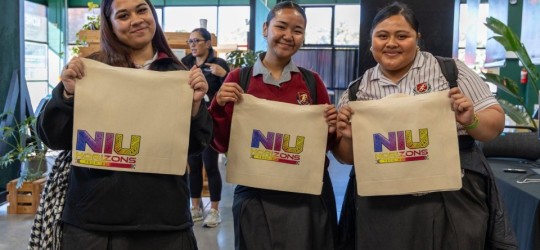
The Niu Wave: Tech Futures — rangatahi, resilience, and rewriting the rules of who tech is for
26 Jun 2026
At Techweek26, The Niu Wave: Tech Futures produced by The Southern Initiative and Te Ngahere created a powerful space for rangatahi and whānau to hear directly from Māori and Pasifika…
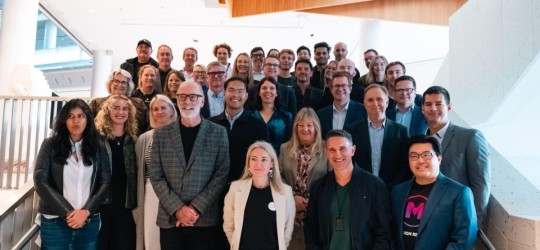
Mayoral Celebratory Event: honouring Auckland’s Hi‑Tech Awards finalists
26 Jun 2026
As Techweek26 built toward its final nights of celebration, Auckland Council brought the sector together for something new: a Mayorals celebration to recognise the 29 Auckland-based finalists heading into the…
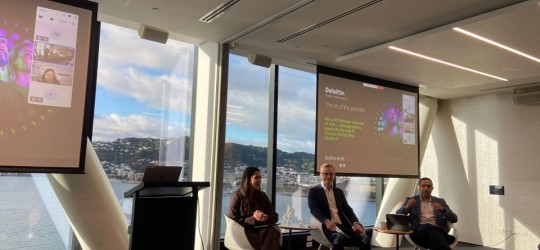
We can't hire our way out of this: Demographics, productivity and the AI choices facing New Zealand (event recap)
26 Jun 2026
At Techweek26, principal sponsor Deloitte hosted a conversation with an intentionally blunt title: We can’t hire our way out of this. The focus landed quickly.